
• About
  • Shop
  • Preserve
  • Blog
  • Contact
  • The Book
  • Cultivate
  • Forage
  • Menu

Natasha Morgan

  • About
  • Shop
  • Preserve
  • Blog
  • Contact
  • The Book
  • Cultivate
  • Forage

Designing for Expansiveness: Small Space Garden Strategies at Little Cottage on a Hill

March 23, 2025

When working with a small garden, every decision counts. Thoughtful design can transform even the most compact spaces into ones that feel generous, multifunctional, and deeply connected to the landscape beyond. At Little Cottage on a Hill, I’ve applied a series of design strategies to maximise space while ensuring a sense of expansiveness and flexibility. These approaches go beyond aesthetics; they create a garden that feels large, layered, and rich in possibility.

Here are some of the key design strategies I’ve employed to make the most of my small garden:
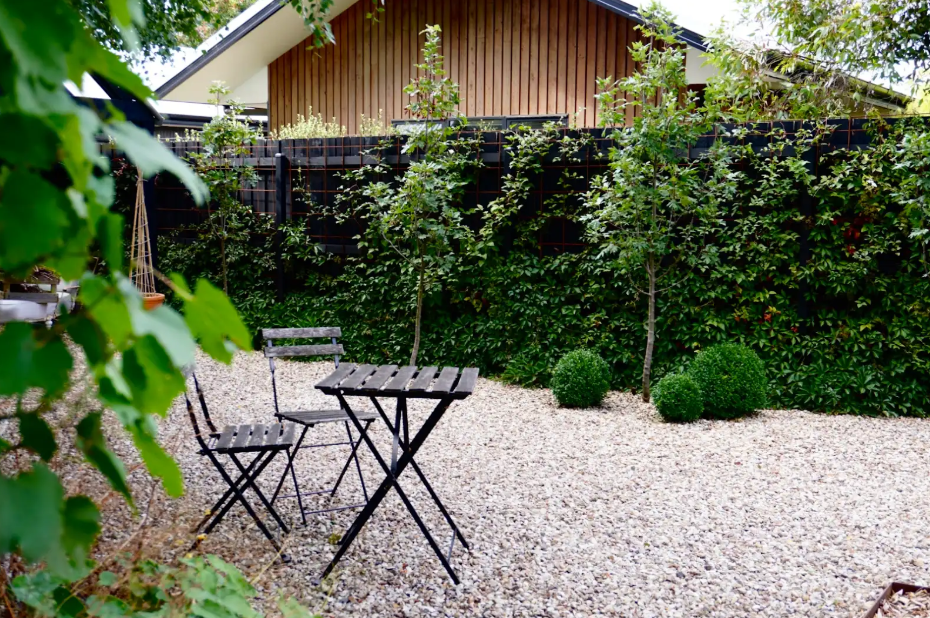
1. Reimagining the Driveway: A Hybrid Driveway-Courtyard

A driveway is typically a single-purpose space, but I love interrogating and reimagining utilitarian elements (remember my potato composting towers?) and spaces. And so, I saw an opportunity to make my driveway work harder. By widening the driveway slightly and gravelling the entire area, I transformed it into something far more dynamic—a courtyard or forecourt that can function as both a practical circulation space and a social hub.

Now this space seamlessly transitions from its everyday function to hosting a long communal table or a fire pit, making it an extension of the garden rather than a leftover or in-between space. The choice of gravel as a surface material contributes to this sense of adaptability—it provides a structured yet informal quality, making it feel like a garden in its own right rather than merely a thoroughfare.

Screenshot 2025-02-19 064131.png
Screenshot 2025-02-19 064149.png
Screenshot 2025-02-19 104317.png

2. A Visually Permeable Fence: Borrowing the Landscape Beyond

Fencing can make a small space feel even more confined, but by choosing a visually permeable material, I’ve allowed the eye to travel beyond my garden’s boundary. This strategy creates a borrowed vista, extending my narrow front yard into the verge garden and further still to the rolling hills beyond. The result is a garden that feels far larger than its actual footprint.

A permeable fence also changes how light filters through, creating shifting patterns of light and shadow throughout the day—adding another dimension to the space. I chose to use Wattle and Wire for this purpose (unfortunately now recently closed after its owner’s retired! Someone please take this on as a new business idea as it’s left and huge gap in the garden design materials market!), a fencing style that blends beautifully with the landscape while providing visual openness. The delicate interplay between the woven wire and machined timbers creates a soft and organic effect, yet crisp and designerly, subtly defining the space without enclosing it. This method of fencing not only enhances the aesthetic of the garden but also supports biodiversity, offering a framework for climbing plants and a habitat for small wildlife.

Screenshot 2025-02-19 130606.png
Screenshot 2025-02-19 130616.png
Screenshot 2025-02-19 130622.png

3. Gravel to the Edges: Blurring Boundaries

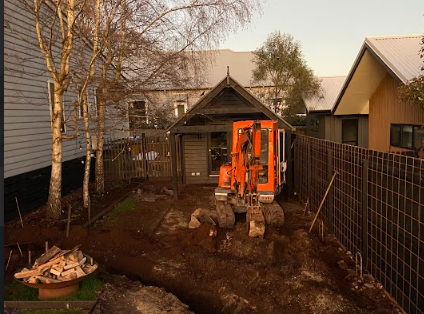
Instead of a traditional garden bed layout, I removed the existing long boundary garden bed and extended the gravel right to the edges of the driveway space and planted clipped buxus balls and fastigiated Malus trilobata (Lebanese Crabapples - more on that below) directly into the gravel. This subtle shift in approach does two things: it visually leads the eye further, making the space feel broader, and it introduces a strong structural rhythm.

The clipped buxus balls act almost as sculptural elements—holding the space, adding year-round interest, and reinforcing the sense of considered design. The fastigiate Malus trilobata (Lebanese Crabapples) trees create verticality without adding bulk, a crucial component in small-space gardening.
Screenshot 2025-02-19 065158.png
Screenshot 2025-02-19 065211.png
Screenshot 2025-02-19 104458.png

4. The Power of Fastigiate Trees and a Lifted Canopy

Fastigiate trees—those with a naturally narrow, upright growth habit—are invaluable in small gardens. They provide height without sprawling, allowing them to be planted closer to boundaries without overwhelming the space. In the driveway-courtyard space, I specifically chose the fastigiate Malus trilobata (Lebanese Crabapples) for their strong verticality, drawing the eye upwards and reinforcing a sense of expansiveness.

By lifting their canopy—the uppermost layer of branches and foliage—I’ve created clear definition between the ground plane, understorey, and tree canopy. This separation not only ensures that each planting layer has its own presence but also allows more light to filter through, reducing the sense of enclosure often felt in small gardens. The canopy also plays a crucial functional role; its elevated branches provide shade while maintaining openness at the lower levels, making the space feel more generous and accessible.

This separation gives each layer of planting its own presence, reinforcing a sense of clarity and structure. It also makes the space more functional—car doors can be opened without interference, and there’s a feeling of openness rather than crowding. The fastigiate form also allows these trees to be placed closer to the fence line without encroaching into the usable space, maximising both beauty and practicality.

Screenshot 2025-02-19 104625.png
Screenshot 2025-02-19 104611.png
Screenshot 2025-02-19 104702.png
Screenshot+2025-02-19+104644.jpg

5. Black Fences and Green Walls: The Art of Disappearance

One of the most effective tricks in small-space design is painting fences black. Dark tones recede visually, allowing fences to ‘disappear’ rather than enclose the space. A boring raw timber paling fence can instantly be sharpened up and brought into the design language of the garden simply by painting it black (or any other very dark colour—though my preference is always for black). This transforms what could be an uninspired backdrop into a considered and elegant design feature that frames the garden rather than competing with it.

To amplify this effect, I clad my black-painted fences in reinforcing mesh (reo), using it as a trellis for Parthenocissus henryana* and Clematis to climb. The result is a living green wall that softens the boundaries of the garden and creates a lush vertical element. In small gardens, using vertical space is essential—climbers, espaliers, and green walls all help to add richness and depth without sacrificing footprint.

* Parthenocissus henryana (Chinese Virginia creeper) is a deciduous climber known for its attractive foliage, which features silvery veins on deep green leaves that turn brilliant red in autumn. It is well-suited for creating green walls and is an excellent choice for training on fences, trellises, or walls.

Screenshot 2025-02-19 105119.png
Screenshot 2025-02-19 105138.png
Screenshot 2025-02-19 105152.png
Screenshot 2025-02-19 105208.png
Screenshot 2025-02-19 105232.png

These strategies are just the beginning. Designing for small spaces is about making every element work harder—creating not just beauty, but flexibility, depth, and a sense of generosity in even the most compact of gardens. By implementing these techniques, I’ve transformed Little Cottage on a Hill into a space that feels far larger than its 515 square metres suggest, and I hope they inspire you to do the same in your own garden.

Thanks for following along on this journey. If you’d like to dive deeper into small-space garden design, join me for an upcoming workshop or explore my online resources.

You may want to check out my related content below:

From Forest Clearing to Town Garden: A Story of Growth – Discover the journey of transforming a space from raw nature to a thriving garden, filled with lessons and inspiration.

Landscape Lingo: The Chelsea Chop and Ways to Have Plants Look Their Best – Learn about the Chelsea Chop technique and other gardening tips to help your plants reach their full potential.

Enjoy exploring these insights for more gardening inspiration!

Natasha xx

Follow along on Instagram, Facebook, LinkedIn, YouTube, or visit my website for more insights into gardening, sustainable living, and the quiet magic of growing.

Tags: Garden Design, Garden Design Principles, Sustainability, Sustainable Living, Living Well, Teaching & Learning
Prev / Next
Newsletter Block
This newsletter signup form needs a storage option. Edit the block and enter a storage location via the Storage tab.

Subscribe

Sign up with your email address to receive news and updates.

We respect your privacy.

Thank you!
October is the month I stop being in charge of the garden. My job now is keeping up with it rather than starting it.⁠
⁠
The asparagus popped up overnight. The crab apple is in blossom and the last of the tulips are blooming underneath while the alliu
October is the month I stop being in charge of the garden. My job now is keeping up with it rather than starting it.⁠ ⁠ The asparagus popped up overnight. The crab apple is in blossom and the last of the tulips are blooming underneath while the alliums come up to meet them. The peas I sowed in September are climbing without being asked. The grass has gone from something I cut once in August to something that needs doing every ten days, if not more.⁠ ⁠ And the tomatoes are not going in. They are potted on, hardened off, sitting in the sun on the north side of the potting shed, and they will stay there until after Cup weekend. Every year someone asks me why mine are not in yet. Every year in the third week of October the frost reminds me why I wait until after the first week of November.⁠ ⁠ My October Garden Tasks blog is now up on the website, and on Substack. Tasks for all climates, what to sow and plant for each climate, both southern and northern hemisphere.⁠ ⁠ Thank you to everyone who has sent me a photo of The Productive Garden Companion turning up at your place. I look at every single one, and each one makes me smile, makes my day. ⁠ ⁠ If you are near the Macedon Ranges, I am hosting a stall at the @bolobekgardenfair this Saturday 3 and Sunday 4 October, with Phoebe Hartley from @billypress_ and Caroline, @thecottageherbalist. Bolobek opens their garden once a year and it’s spectacular. Come and find us there, please say hi!⁠ ⁠ Link in bio for the blog.⁠ ⁠ #productivegarden #GrowOneThing #TheProductiveGardenCompanion #NatashaMorgan #SpringGarden⁠
I had absolutely no intention of putting my face on video today. In fact, I was out on the verge picking rhubarb to make rhubarb, rose and vanilla bean syrup when the postie arrived. But when the postie brings you a book like this from @mydarlinglemonthyme , well… you sort of have to share it! And the timing couldn’t be more perfect, because this beautiful book is going straight into my bag and coming with me to @booksforcooksau tonight, where I’m heading along to one of Emma’s book launch events. What you might not know is that Emma is also one of the contributors to my book, The Productive Garden Companion. She is one of those truly lovely, down-to-earth, authentic, generous people who moves so naturally between cooking, growing and gardening. I’ve known Emma’s work through her cookbooks and her beautiful blog for years, but this book feels like an invitation to step right into her world — into her garden, her growing and her cooking — and it is extraordinarily beautiful and generous. It also feels like such a lovely synergy with where I am right now with The Productive Garden Companion. Congratulations, Emma. This really is something special. And I’m a pretty tough critic when it comes to books. This one is one of the good ones. xx #cookbooks #growyourown #EmmaGalloway #livingwell
Well. This just arrived in the mail, and to say I’m excited is putting it very, very lightly. Ten pages. I literally counted them like a kid. 1, 2, 3, 4, 5, 6, 7, 8, 9, 10 pages in the November issue of @bhgaus Better Homes and Gardens, and I am so incredibly chuffed. I had the most beautiful chat with Jenny Dillon. She asked whether I think of myself as a landscape architect or a gardener first, and I still don’t have a tidy answer for any of it. She asked whether I control my garden or my garden controls me. I told her about my sometimes unforgiving relationship with the garden (yes I pulled out the magnificent plume poppies when they got too unruly and that’s kind of how I roll!). There’s a suit of incredible photography of my ‘natural habitat’ at Little Cottage on a Hill and Oak & Monkey Puzzle (thank you @weaving and @caitlinmillsphotography ), and an extract from my just released and already best seller book, The Productive Garden Companion, on trace-layer mapping and planning by noticing rather than by calendar. If you’ve been to a workshop with me you’ll recognise all of it. I’m in some pretty fine company in this issue too, alongside @rewildingsuburbia @gardening.with.ingrid which is the icing on the cake, so get your copy, have a read, and I would love to know what you think. It’s a jam packed issue. Oh, and one last thing. My book has gone a little bit nuts over the last week and a half, and that is because of ALL of YOU. Last week in its very first week it hit No. 41 across all book sales in Australia. Every category, every price point. I might have had a little cry over the weekend. And that’s because none of that happens without you. So thank you, literally from the bottom of my heart. xx @murdochbooks #TheProductiveGardenCompanion #BetterHomesAndGardens #MurdochBooks #NatashaMorgan #GardenDesign
Transform Your Garden This Spring: 3 Simple Jobs to Kickstart the Season⁠
⁠
As spring announces its arrival, I’ve been busy back in the garden. Now is the perfect time to refresh your garden and prepare it for the vibrant season ahead. Here&rsq
Transform Your Garden This Spring: 3 Simple Jobs to Kickstart the Season⁠ ⁠ As spring announces its arrival, I’ve been busy back in the garden. Now is the perfect time to refresh your garden and prepare it for the vibrant season ahead. Here’s three essential tasks I’m doing to ensure I’m nurturing a garden that thrives:⁠ ⁠ Winter Garden Cutback: I’ve recently cleared away the old spent winter seedheads, dried umber grasses and any foliage that has died back to welcome the new, allowing my spring plants to flourish. If you haven’t started there is still time!⁠ ⁠ Fertilise: Enriching and nurturing the soil with organic, certified fertilisers or the best locally available manures and composts provides the nutrients your garden needs to thrive. Healthy, vibrant soils mean healthy, vibrant plants. Soil is the foundation of any good garden.⁠ ⁠ Check Irrigation: Take a moment to ensure your irrigation system is ready to support your garden’s growth as the days grow warmer. I’m flushing out drip irrigation from the end caps to remove any debris.⁠ ⁠ By tending to these tasks now, you’ll set the stage for a season filled with growth, beauty, and abundance. New growth is already starting to push through the ground, so it’s definitely time.⁠ ⁠ Join my workshops: If you feel inspired to learn more about how you can set your garden up for success, why not join me at an upcoming workshop where I’ll share the joy of a garden that thrives? ⁠ ⁠ With the onset of spring, I’m shaking things up a bit around here, and I look forward to sharing more tips, tricks, and things happening in my garden at Little Cottage On A Hill. Here’s to a flourishing spring!⁠ ⁠ #TheProductiveGardenCompanion #NatashaMorgan #springgardentasks #springgarden #growonething⁠
The Productive Garden Companion is out in the USA. So I thought I’d celebrate by introducing you to one of the book’s North American contributors @christian_douglas_design. Christian Douglas is a British-born Californian landscape architect and garden designer. His practice, Christian Douglas Design, creates ecologically informed, food-productive landscapes. He has spent more than 30 years making gardens across England, Jordan and the United States. His projects have been covered by Architectural Digest, The Wall Street Journal, The Financial Times and many many more. And his design philosophy lives in his own beautiful book, The Food Forward Garden (definitely worth a read!) Christian, his studio and his backyard-farming crew at @thebackyardfarmco spent twelve years designing and farming side by side, and what they learned is simple: “When you grow food close to the house, people garden more, they learn quicker, they eat healthier.” Follow that idea through our conversation and you arrive here, at his hope for where garden design goes next: “My hope and dreams is that we actually remove the term edible, and they’re just called landscapes.” This clip is just a tiny snippet of the generous conversation Christian shared with me. The full conversation is available via the book’s QR-linked pages, along with conversations with 24 contributors from all over the world. The Productive Garden Companion is out now in Australia, the UK and the USA. Order wherever you are in the world via the link in my bio. If Christian’s words resonate, please share them with a gardening friend on your side of the world. Check out his work and book and let’s keep these conversations and important work going. Thanks so much Christian! It’s such a privilege to have your thoughts and words so generously shared find a way into my book. #Gardening #GardenDesign #KitchenGarden #GrowYourOwn #TheProductiveGardenCompanion @murdochbooks @murdochbooks_uk
I usually dread the big spring chop, but not this year! And well, that's because everything from the garden cutback was going to be transformed into something incredible. But more of that tomorrow…⁠ ⁠ Spring is a little later here in my Daylesford cold temperate garden. Over the years I've come to understand spring not as a date on a calendar but as an unfolding of small events. Each small observation compounds in my mental notebook through my morning garden lap until my brain shouts out to me - 'it's happening! Spring is nearly here!'⁠ ⁠ That moment hit last week. The little glimmer of fresh green shoots about to pop beckoned that it's time to shed the garden's winter layers! This big chop is a task I leave as long as I possibly can. The filigree of winter seed heads and umber grasses provide visual interest and structure across the colder months, but also, most importantly, they provide harbour and sustenance for insects and birds. The lorikeets go mad for the echinacea seedheads, and insects find homes inside hollow stems.⁠ ⁠ I believe a garden should be designed for interest all year round, and so with the 1000 fragrant jonquils and daffodils I planted as an understorey to winter, now pushing through the earth and many already flowering, it's time to let the spring bulbs sing whilst the rest of the garden wakes up.⁠ Here's a little video of the big chop. Now's the time to get inspired to refresh your own garden.⁠ ⁠ And tomorrow I'll show you where every armful of it ended up. It's not what you'd expect.⁠ ⁠ #springgarden #gardenmaintenance #wildlifegarden #TheProductiveGardenComoanion #NatashaMorgan⁠
They used to call Charles Dowding @charles_dowding the lazy gardener. He told me this from his extraordinary experimental no-dog market garden and international flagship, Homeacres in Somerset, UK, me at the kitchen table in Daylesford, Australia, in a conversation I recorded for The Productive Garden Companion. Somewhere along the way hard work became the point of gardening, and Charles has spent 40 years asking whether it has to be. Feed the soil and let the biology do the rest. It’s the same thing I’ve been trying to say about a whole garden: make one that gives more than it takes, do it thoughtfully and then consider if there’s ways you can ‘get out of its way’ to reap the rewards. That’s why the book holds whole conversations. Scan the QR code on the no-dig pages and you’re listening to Charles, unscripted, in real conversation generously and authentically shared. There are QR codes like this all through the book. Two years of work, and these are the part I’m probably proudest of - the part that takes the book beyond its pages and continues to expand with time. Books generally are capsules fixed in time. My hope is that this one shares, gives and evolves, but most importantly that it continues to walk beside you as your own garden journey grows. Charles has walked alongside me in my own growing journey over the years, providing hard won insight and inspiration. His conversation with me is an invitation for him to walk beside you too! I’m so honoured to announce that The Productive Garden Companion is out now in the UK (Murdoch Books) wherever you buy books, or via the link in my bio. Thank you so much Charles for finding your way into its pages. @murdochbooks_uk @murdochbooks #nodig #charlesdowding #theproductivegardencompanion #NatashaMorgan #ukgardening
Tonight I’ll stand in a room full of the people who have contributed to The Productive Garden Companion through its words, a life, and friendships - and hold it up this book amongst you all for the very first time.

I cannot wait  to be amongst
Tonight I’ll stand in a room full of the people who have contributed to The Productive Garden Companion through its words, a life, and friendships - and hold it up this book amongst you all for the very first time. I cannot wait to be amongst a room of the very special people who helped make this book happen. The growers, makers and thinkers whose hands are in every chapter, all in one room on one night. Friends from twenty years back. Family. And you, I hope. I keep trying to think about the words I’ll share. The beautiful faces I’ll see and what my community means to me - the bit where I say thank you out loud and I can’t get through it without emotions flooding in. I’ve just looked over the latest guest list and gosh there’s going to be some extraordinarily important people there tonight. I’d love to welcome you to that room too! Saturday’s Daylesford book launch is now sold out, so if you’ve been waiting for one of these, tonight is the first launch and there’s a handful of tickets left. Then it’s done. $15, welcome drinks and food included. Tickets: tap the link in my bio, choose ‘Natasha’s events, workshops & e-books’, then Melbourne Launch. Melbourne Book Launch Thursday 17 September 2026 5.30–7.30pm Firecracker Events 58A Victoria Rd, Northcote The biggest of big thanks to my dear friend Cassie @firecrackerevent , on this crazy journey with me since my student days in 2002, in more wonderful ways than I can count. Thank you to our incredible supporters @hepburndistillery @victorias.heartland @barry_and_co @thecottageherbalist @billypress_ @acreofroses @amber.gardener @stonewallsmusk @musklanewine @thediggersclub @gardencentresofaustralia @woodendgeneral @avenuebookstore @kateseddon_landscapedesign @mineralspringsco
If I look a bit bleary-eyed in this, it’s because of a book. There hasn’t been a lot of sleep around here lately, and all of it comes back to The Productive Garden Companion. Today is publication day. I keep trying to explain what this book is and I land in the same place every time. Yes, it’s a gardening book. It’s a book about landscape design. And underneath all of that, it’s a book about what it is to live well, and why I keep returning to the garden through every chapter of my life. In many ways it’s the culmination of fifty years of living. It’s the book I couldn’t find. A productive garden, to me, was never only about food. It’s healing. It’s solace. It’s wellbeing, community, biodiversity. It’s a garden that gives more than it takes, and that has been the ethos of this book from the very first page. I hope you find it as generous as you have been with me. Because the support has been unbelievable. Utterly phenomenal. And I truly know this book will find its way into the hands and hearts of people who perhaps didn’t even know they needed it. So this is my invitation. Wherever you are, wherever you grow, whatever your scale or your climate, a balcony with a few pots or a grand estate, this book is there to walk beside you. To inspire you, to empower you, to invite you to start where you are. Grow one thing. Even if that’s all you start with. And maybe let it ripple out. It’s out now. Online, in stores, and hopefully coming to libraries and schools near you. Find it where you find all good books. And I’m doing a massive run to the post office today to send out all of your incredible orders. Thank you. Thank you for being here. None of this happens alone. I have so much more to share. @murdochbooks #TheProductiveGardenCompanion #NatashaMorgan #MurdochBooks #GrowOneThing #GardenDesign